How Sarah Scaled Her Food Blog
A food blogger was burning out trying to keep up with content demands. Flockx helped her double output while rediscovering why she started blogging in the first place.
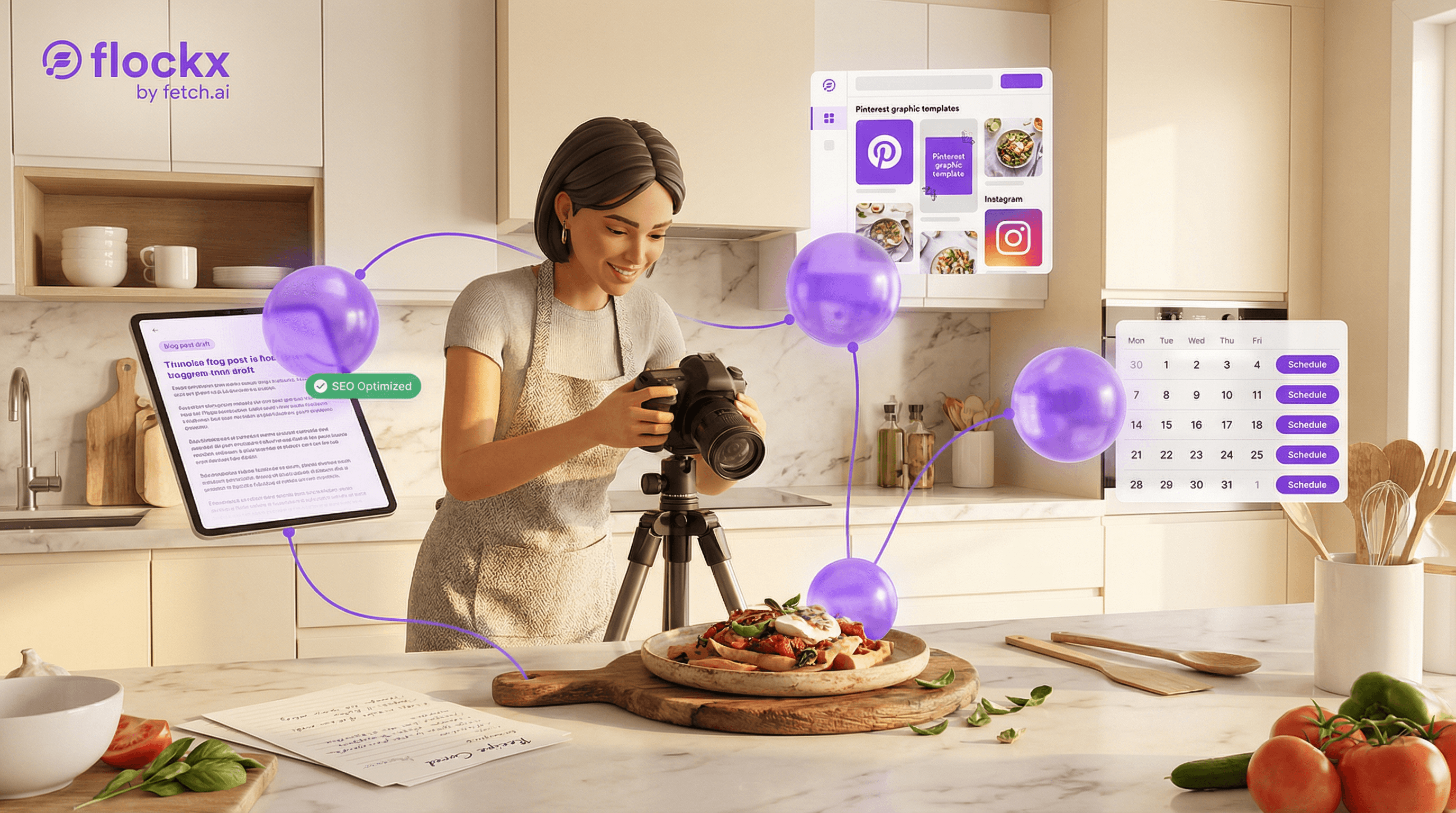
The Content Treadmill
Sarah Chen started "Comfort Kitchen" five years ago as a passion project—sharing her grandmother's recipes with a modern twist. The blog grew into a full-time career with 500,000 monthly readers. But success came with a price.
To maintain her audience and satisfy the algorithm, Sarah needed to publish 3-4 times per week. Each post required recipe development, photography, SEO optimization, Pinterest graphics, newsletter copy, and social promotion. What started as joy became a grind.
The Weekly Reality
Recipe development: 8-10 hours
Photography: 6-8 hours
Writing/SEO: 10-12 hours
Social/newsletter: 6-8 hours
Total: 30-38 hours of content work per week—before sponsorships, emails, and actually cooking
Sarah was falling behind on sponsored content, her email inbox was a disaster, and she couldn't remember the last time she cooked just for fun.
Finding the Balance
A food blogger friend mentioned using AI for "the stuff that isn't really you anyway—the SEO rewrites, the Pinterest descriptions, the tenth variation of 'serve warm with your favorite toppings.'"
Sarah was intrigued but protective. Her voice was her brand. Readers came for her stories, her warmth, her personality. Could AI really help without diluting what made Comfort Kitchen special?
What Sarah Built
Sarah created a content specialist trained on 200+ of her posts. It learned her voice, her recipe format, her storytelling style—and became an extension of her creative practice rather than a replacement for it.
Training on Her Voice
Feeding the Archive
Template Creation
The Collaboration Flow
The First Collaboration
Sarah tested with a recipe she'd been procrastinating on—a simple pasta dish:
Sarah's notes: "Simple weeknight pasta. Lemon, garlic, parmesan. Made this when I was exhausted after work. Grandma would add crispy breadcrumbs on top. Want to emphasize how this is a pantry-friendly lifesaver."
Draft received: A 600-word post that captured her conversational tone, included a short anecdote about her grandmother's "breadcrumb rule," highlighted the pantry-friendly angle, and had proper SEO structure—all in Sarah's voice.
Sarah spent 20 minutes refining instead of 3 hours writing from scratch. The final post was indistinguishable from her purely solo work.
The Transformation
Writing Time
From 10-12 hours per post to 2-3 hours. Same quality, fraction of the time.
Content Output
From 3 posts per week to 5. More content without more burnout.
Joy Restored
Sarah started experimenting with recipes again—cooking for fun, not just for content.
Reader Engagement
Comments up 23%. More consistent posting meant more engaged readers.
The Creative Partnership
Sarah's AI didn't replace her creativity—it amplified it. She focused on what only she could do: developing recipes, capturing photos, and deciding what stories to tell. Her AI handled the execution that had been draining her energy.
The Lesson
Sarah's story shows that AI can preserve authentic voice while reducing creative burnout. The key was training on her actual work—not generic food writing, but five years of her specific voice, stories, and style.
Sarah's Advice
"I was afraid AI would make my blog feel generic. Instead, it gave me back the time to make it more personal. I'm writing more, experimenting more, and actually enjoying it again. My readers can't tell which posts I drafted from scratch and which I collaborated on with AI—because they all sound like me."
Comfort Kitchen now publishes more content than ever, but Sarah works fewer hours. She's started a cookbook project she'd been putting off for years. And she cooks for fun again—something she'd almost forgotten how to do.
Ready to Scale Your Creative Output?
Like Sarah, you can build Flockx that amplifies your voice while reducing burnout.