How Your AI Team Learns and Remembers
Your AI team isn't just smart—it's learning about your world. Here's how shared knowledge and individual expertise work together to deliver results that feel unmistakably yours.
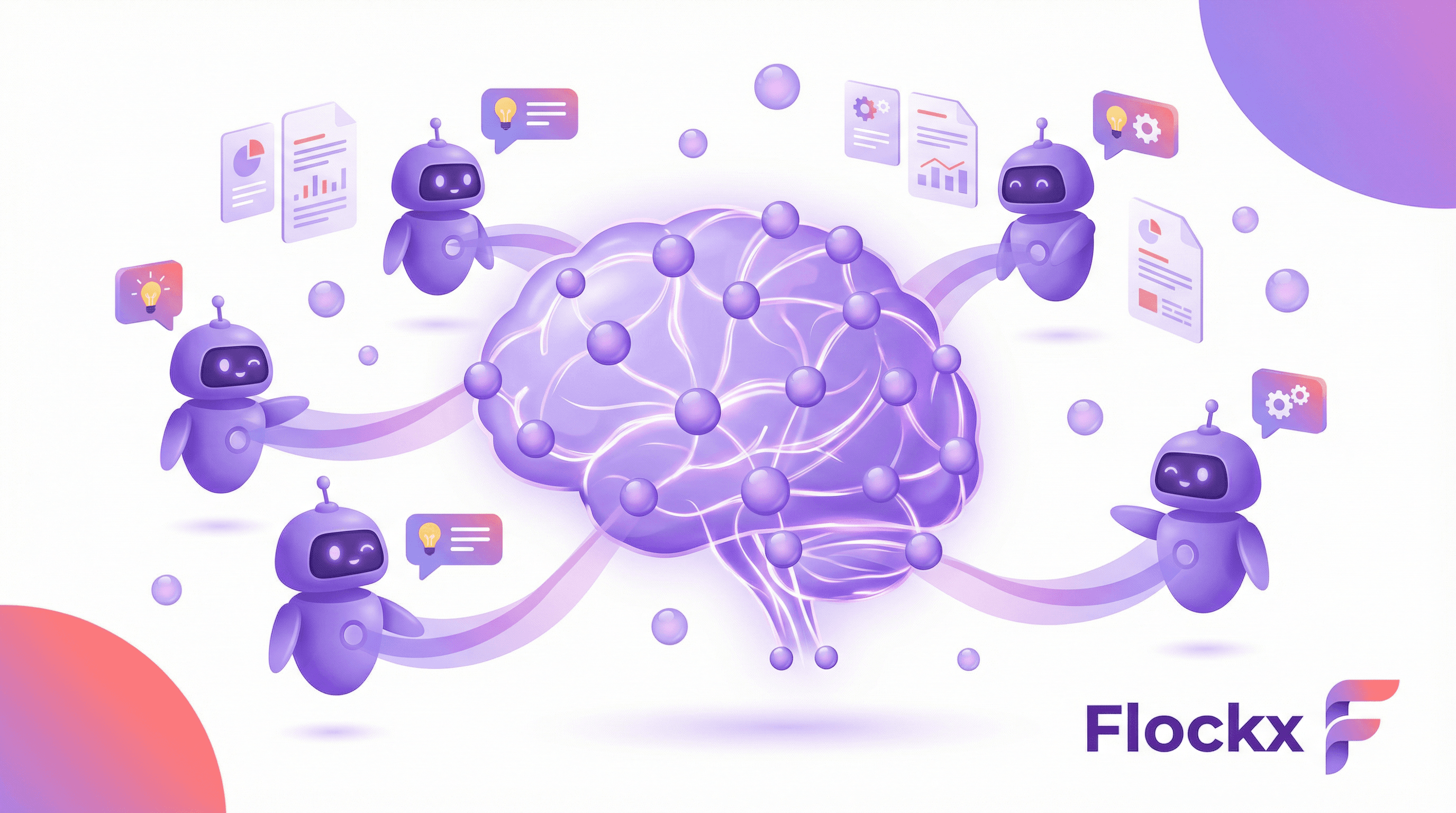
Think about how a great team works. New members learn the company culture, the brand voice, the way things are done. Over time, each person also develops their own expertise—the designer knows visual trends, the writer knows your audience's language, the strategist knows your competitive landscape.
Your AI team works the same way.
Every AI specialist on your team has access to two types of knowledge: what the whole team knows, and what they know individually. This two-layer approach is what transforms generic AI assistants into specialists who truly understand your work.
The Core Insight
Generic AIs give generic results. Your AI team learns your brand, your voice, your workflows, and your preferences—then applies that knowledge to everything they do.
The Problem With Generic AI
You've probably experienced this: you ask an AI to write something, and it comes back sounding... fine. Professional. Completely generic.
That's because most AI tools start from zero every time. They don't know your brand voice. They don't know your audience. They don't know that you never use exclamation points, or that you always reference your core values, or that your clients prefer formal language.
What Generic AI Misses
About Your Brand
- • Your unique voice and tone
- • Your brand guidelines and style
- • Your values and positioning
- • How you talk about what you do
About Your Work
- • Your preferred workflows
- • Your past projects and examples
- • Your client preferences
- • Your industry terminology
The result? You spend time editing, correcting, and re-explaining. The AI becomes a tool you fight with rather than a team member you collaborate with.
Shared Knowledge: What Your Whole Team Knows
In a human team, there's knowledge everyone shares. The brand guidelines on the wall. The style guide in the shared drive. The unwritten rules about how things are done here.
Your AI team has the same concept: shared knowledge that every specialist can access.
Shared Team Knowledge Includes
- Brand Voice: How your brand sounds—formal or casual, technical or accessible, bold or understated.
- Style Guidelines: The specific rules you follow—Oxford commas, title case, emoji usage, formatting preferences.
- Key Terminology: Industry terms, product names, phrases you always use (or never use), how you describe what you do.
- Workflows: Your approved processes—how content gets reviewed, what steps projects follow, who approves what.
- Client Context: Who your audience is, what they care about, how they prefer to be addressed.
Think of It Like Onboarding
When you hire a new team member, you share the brand guidelines, introduce them to your clients, and explain how things work. Shared knowledge is the same onboarding—just for your AI team.
Individual Expertise: What Each Specialist Knows
Beyond shared knowledge, each specialist on your team develops their own expertise. Your content writer learns your writing style. Your strategist understands your competitive landscape. Your designer knows your visual preferences.
Each AI specialist on your team works the same way. They have their own role, their own expertise, and their own memory of the work they've done with you.
Role-Specific Knowledge
- • Their area of expertise (writing, research, strategy)
- • Domain-specific best practices
- • Specialized skills and capabilities
- • Industry knowledge relevant to their role
Learned Preferences
- • Your feedback and corrections
- • Examples of work you loved
- • Patterns from past projects
- • Your specific preferences for their work
This means your content specialist and your research specialist might approach the same topic differently— each bringing their unique perspective while staying aligned with your brand.
Two Layers Working Together
The magic happens when shared knowledge and individual expertise combine. Every specialist on your team knows your brand and follows your guidelines. But each one also brings their own specialized skills to the table.
How It Works In Practice
When you ask your content writer for a blog post:
- Shared knowledge → Uses your brand voice, follows your style guide, references your terminology
- Individual expertise → Applies writing best practices, structures content effectively, uses techniques that worked in past posts
When you ask your strategist to analyze an opportunity:
- Shared knowledge → Understands your positioning, knows your target audience, references your values
- Individual expertise → Applies strategic frameworks, draws on market knowledge, uses analytical approaches that resonate with you
The result is work that's both consistent (aligned with your brand) and excellent (leveraging specialized expertise).
Knowledge Compounds Over Time
Here's what makes this powerful: knowledge compounds. Every piece of context you share, every correction you make, every example of great work—it all adds up.
Week One: Learning the Basics
Your team knows your brand name, your basic offerings, and your general tone. Output is good but still somewhat generic.
Month One: Understanding Your World
After sharing more context and providing feedback, your team understands your audience, your preferences, and your standards. Output starts feeling distinctly yours.
Month Three: Working Like a Team
With accumulated knowledge and experience, your team anticipates your needs, references past work, and delivers results that require minimal editing.
The Flywheel Effect
The more your team knows, the better they perform. The better they perform, the more you use them. The more you use them, the more they learn. It's a virtuous cycle that makes your AI team more valuable over time.
Getting Started
Building your team's knowledge doesn't require a massive upfront investment. Start with the essentials and build from there.
- Share your brand basics: Your website, your about page, a description of what you do and who you serve.
- Define your voice: Are you formal or casual? Technical or accessible? Describe how your brand should sound.
- Add examples of great work: Share content, projects, or outputs that represent your standards.
- Provide feedback: When something isn't quite right, explain why. Your team learns from every correction.
- Update as you grow: Your team should evolve with you. Add new context as your business changes.
Remember: this isn't a one-time setup. It's an ongoing relationship. The more you invest in teaching your team, the more they can do for you.
Your Team Is Waiting to Learn
Generic AI gives generic results. But an AI team that knows your brand, understands your work, and has learned your preferences? That's a team that delivers results you're proud to use.
Start teaching your team today. Share your brand voice. Add your best examples. Provide feedback when things aren't right. Watch as your AI specialists become true extensions of your creative practice.
Ready to Build Your AI Team?
Your team of AI specialists is waiting to learn about your brand, your work, and your standards. Start building knowledge today.